
One wrong step. That’s all it takes. Scaffold falls account for over 60 deaths and 4,500 injuries every year in the U.S. alone. Most of these accidents? Completely preventable.
This guide covers everything you need to confirm before your boots leave the ground:
- Pre-climb inspection checklist
- Load capacity and structural stability checks
- Personal protective equipment (PPE) requirements
- Common hazards and how to spot them
- OSHA compliance essentials
At EZ Access & Equipment, we’ve spent 25+ years helping South Florida crews work safer at height. We know what corners get cut — and what it costs when they do.
Pre-Climb Inspection Checklist
Stepping onto an uninspected scaffold is like driving a car without checking the brakes. You might be fine. But the risk? Not worth it.
OSHA requires scaffolds and scaffold components to be inspected for visible defects by a competent person before each work shift, and after any occurrence that could affect the scaffold’s structural integrity. This isn’t a suggestion. It’s federal law under 29 CFR 1926.451(f)(3).
Let’s break down exactly what needs to be checked before anyone climbs.
Who Can Perform the Inspection?
Not just anyone with a hard hat. A competent person is defined as someone capable of identifying existing and predictable hazards in the surroundings or working conditions that are unsanitary, hazardous, or dangerous to employees, and who has authorization to take prompt corrective measures to eliminate them.
That last part matters. The inspector needs authority to shut things down if something’s wrong. Successful completion of a training course alone does not necessarily establish an individual as a competent person. It takes real-world knowledge, scaffold-specific training, and the power to act.
Pro Tip:The competent person must be able to evaluate the effects of occurrences such as a dropped load, or a truck backing into a support leg that could damage a scaffold. If your designated inspector can’t make those judgment calls, they’re not the right fit.
When to Inspect
Timing matters. Here’s when inspections are non-negotiable:
- Before every work shift (daily minimum)
- After severe weather (high winds, heavy rain, snow)
- After any structural modification (adding sections, moving the scaffold)
- After an incident (equipment dropped, scaffold struck by vehicles or materials)
The frequency will depend on factors such as the type of scaffold, site, and weather conditions, intensity of use, age of the equipment, and how often sections or components are added, removed, or changed.
The 7-Point Inspection Checklist
Use this framework every single time:
| Inspection Area | What to Check |
|---|---|
| 1. Base & Foundation | Level surface, stable footing, base plates in place, no settling or shifting |
| 2. Legs & Uprights | Plumb positioning, no bends or cracks, properly seated on base plates and mud sills |
| 3. Bracing & Connections | Adequate bracing in all directions, all locking mechanisms engaged (J-Locks, C-Locks, T-Locks) |
| 4. Platforms & Planks | Fully decked with no gaps over 1 inch, no cracks/splits/warping, planks don’t extend more than 12 inches past the frame |
| 5. Guardrails & Toeboards | Toprails between 38-45 inches, midrails installed, toeboards secured |
| 6. Access Points | Ladders or stairways are secure, no use of cross braces for climbing |
| 7. Surrounding Hazards | Power lines at least 10 feet away, no obstructions, warning signs posted |
Check metal components for bends, cracks, holes, rust, welding splatter, pits, broken welds, and incompatible parts. Any defect that reduces strength below OSHA requirements means the scaffold comes out of service immediately.
Scaffold Tagging System
Color-coded tags communicate the scaffold’s status at a glance:
- 🟢 Green Tag: Safe to use
- 🟡 Yellow Tag: Restricted use (weight limits, certain areas need repair)
- 🔴 Red Tag: Do not use (unsafe, pending repairs)
Tags are typically color-coded and serve as a visible indicator of the scaffold’s condition and whether it is safe to use. If there’s no tag or an outdated one, treat the scaffold as off-limits until a competent person re-inspects it.
What Happens If You Skip Inspection?
Beyond the obvious safety risks:
- OSHA citations and fines (scaffolding violations consistently rank in OSHA’s Top 10)
- Project delays if an inspector shuts down your site
- Personal liability for supervisors and competent persons
- Workers’ comp complications if injuries occur on uninspected equipment
Make Inspections Easier With the Right Equipment
Inspection is only as good as the equipment being inspected. Damaged frames, bent braces, and worn planks create endless headaches and safety risks.
At EZ Access & Equipment, every scaffold rental ships in inspection-ready condition. Our team handles professional installation, so you start each project with a solid, code-compliant setup. And if something fails inspection mid-project? We’re a phone call away with replacement parts and 24/7 support.
Load Capacity and Structural Stability Checks
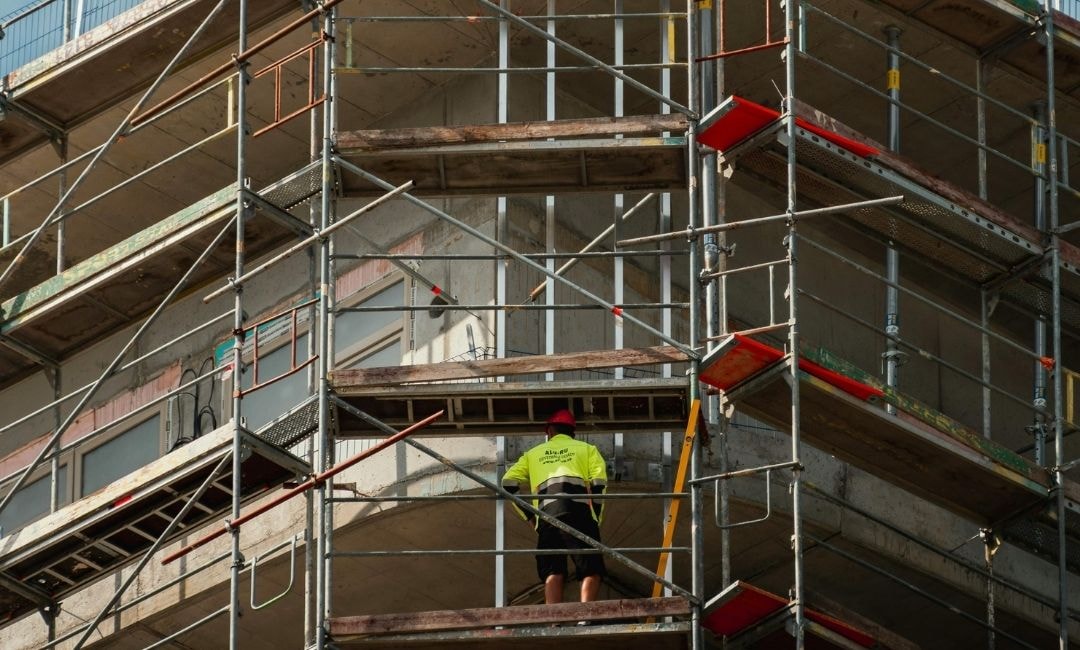
Scaffolding structures fail for one reason more than any other: overloading. Before climbing, you need to confirm that the scaffold structure can handle the weight.
OSHA requires each scaffold and scaffold component to support its own weight and at least 4 times the maximum intended load applied or transmitted to it. This 4-to-1 safety ratio isn’t arbitrary. It accounts for environmental hazards like wind, uneven terrain, and the shock from workers involved in moving materials.
What Counts as “Maximum Intended Load” by Occupational Safety and Health Administration (OSHA)?
Maximum intended load includes the combined weight of all workers, equipment, tools, materials, and other loads reasonably anticipated to be applied to the scaffold at any time. OSHA counts each person as 250 pounds for calculation purposes.
Quick stability checks before climbing:
- Scaffold platforms are fully planked with no gaps over 1 inch
- Planks don’t deflect more than 1/60 of the span when loaded
- Wheel brakes are locked (for mobile scaffolds)
- Tie-ins and bracing secure scaffolds with a height-to-base ratio over 4:1
- Toe boards installed to prevent falling objects
When you rent from EZ Access & Equipment, our team calculates load requirements during installation and ensures every scaffold structure meets safety standards before handoff.
Personal Protective Equipment (PPE) Requirements
Even on a perfectly inspected scaffold, construction workers need fall protection and PPE. It’s non-negotiable under occupational safety rules.
When PPE Is Mandatory
Guardrails, a personal fall-arrest system, or both must protect each employee more than 10 feet above a lower level from falling. For suspension scaffolds, OSHA requires both guardrails and personal fall arrest systems.
Required PPE for Scaffold Work
| Equipment | Purpose |
|---|---|
| Full-body harness | Arrests falls; attachment point at center back |
| Lanyard with shock absorber | Connects harness to anchor; limits fall distance |
| Hard hat | Protects from falling objects and head injuries |
| Non-slip footwear | Prevents slips on scaffold platforms |
| Safety glasses | Shields eyes from debris |
Personal fall arrest systems shall be inspected prior to each use for wear, damage, and other deterioration, and defective components shall be removed from service.
Pro Tip:ANSI Z359.11 states that a full-body harness should support users within the capacity range of 130-310 lbs. If workers fall outside this range, specialized equipment is required to prevent serious injury.
Proper training on PPE use is just as important as having the gear. Workers involved in scaffold operations need hands-on instruction on safe climbing practices and electrical hazards before stepping onto any platform.
Common Hazards and How to Spot Them
Knowing what to look for separates safe crews from statistics. Scaffold safety starts with recognizing hazards before they become incidents.
Scaffold-related hazards include falls, falling objects, structural instability, electrocution, and overloading. These are the most common causes of scaffold injuries in the construction industry. Let’s break each one down.
1. Falls From Height
Falls account for 10% of all scaffolding accidents and more than 50% of deaths in the construction industry. They happen when guardrails are missing, platforms are incomplete, or workers skip fall protection.
How to spot it:
- Missing or damaged guardrails and midrails
- Gaps in planking wider than one inch
- Workers climbing cross braces instead of stair towers or ladders
- No harness use above 10 feet
Safety tip: Always maintain three points of contact when climbing. Never rush.
2. Falling Object Hazards
Tools, materials, and debris can slip off scaffold platforms and strike workers below. When toe boards are missing, items on the platform can slide off and pose a danger to those below.
How to spot it:
- Missing toe boards along platform edges
- Unsecured tools and materials
- Cluttered work surfaces creating trip hazards
- No barricades below active scaffold areas
3. Structural Collapse
Collapse or structural failure can be avoided during assembly by following the manufacturer’s instructions and OSHA requirements. Improper assembly, overloading, and unstable foundations cause the whole structure to fail.
How to spot it:
- Scaffold not plumb or level
- Missing bracing to prevent swaying
- Foundations on unstable ground (bricks, barrels, loose soil)
- Concentrated loads exceeding load limits
- Damaged or corroded components
4. Electrocution
Electrocution is a fatal hazard that accounts for 18% of scaffolding-related deaths. Electricity lines near scaffolding structures pose significant risks, especially when using conductive materials.
How to spot it:
- Scaffold erected within a minimum distance of power lines (less than 10 feet for uninsulated lines)
- Metal scaffolds or tools near overhead wires
- No warning signs or barriers near electricity lines
- Heavy machinery operating near electrical equipment
For insulated lines of less than 300 volts, the minimum clearance distance is 3 feet; for uninsulated lines, it is 10 feet. If you can’t maintain a safe distance, the utility company must de-energize or relocate the lines first.
Regular inspections catch new hazards before they cause harm. A competent builder should walk the scaffold daily and after any weather event or modification.
OSHA Compliance Essentials
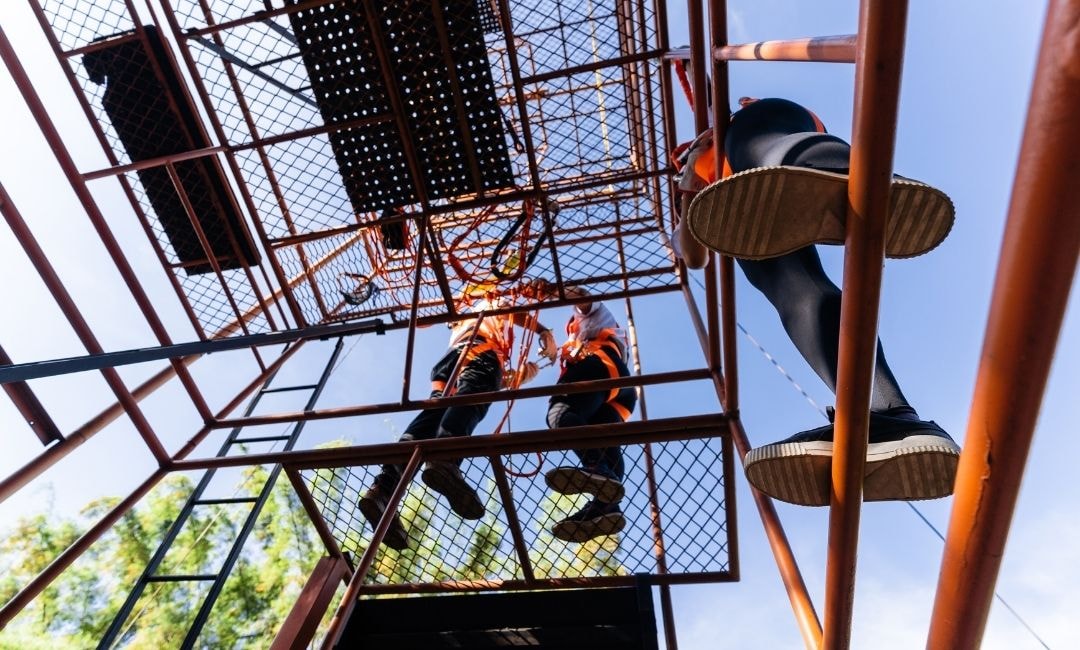
The Occupational Safety and Health Administration doesn’t just suggest scaffolding safety standards. They enforce them with citations, fines, and site shutdowns.
There were 2,859 citations of the Scaffolding Standard during fiscal year 2023. Scaffold safety violations consistently rank in OSHA’s Top 5 most-cited standards. The message is clear: compliance isn’t optional.
Key OSHA Standards You Must Follow
OSHA’s scaffold safety regulations fall under 29 CFR 1926 Subpart L. Here are the non-negotiables:
| Requirement | OSHA Standard |
|---|---|
| 4:1 load capacity ratio | 1926.451(a)(1) |
| Fall protection above 10 feet | 1926.451(g)(1) |
| Competent person inspections | 1926.451(f)(3) |
| Proper access (ladders, stair towers) | 1926.451(e) |
| Guardrails on open sides | 1926.451(g)(4) |
| Proper training for all workers | 1926.454(a) |
All employees must be trained by a qualified person to recognize the hazards associated with the type of scaffold being used and how to control or minimize those hazards. The training must include fall hazards, falling object hazards, electrical hazards, proper use of the scaffold, and handling of materials.
What Triggers Retraining?
Proper training isn’t one-and-done. OSHA requires retraining when:
- Worksite changes introduce new hazards
- Different scaffold types are used
- A worker demonstrates unsafe practices
- Safety measures or equipment change
The Cost of Non-Compliance
OSHA’s maximum penalties for serious violations increased to $15,625 per violation. The maximum penalty for willful or repeated violations is $156,259 per violation.
Beyond fines, violations trigger:
- Project shutdowns until hazards are corrected
- Increased insurance premiums
- Legal liability for injuries
- Reputation damage that affects future bids
Pro Tip: Only composite scaffolds and scaffold components that meet OSHA standards should be used. Mixing parts from different manufacturers without verification from a competent builder person can void compliance and create a safer work environment risk.
How EZ Access & Equipment Supports Compliance
We handle the heavy lifting on OSHA compliance. Every rental includes:
- Equipment that meets current safety regulations
- Professional installation by trained crews
- Documentation for your compliance records
- Competent Person Training programs for your team
When you work with EZ Access & Equipment, you’re not just renting scaffolding. You’re partnering with a team that takes scaffold safety as seriously as you do.
Work Safer at Height With EZ Access & Equipment
Climbing a scaffold without confirming safety checks is a gamble no one wins. The few minutes you spend on inspections, PPE checks, and hazard assessments can mean the difference between going home safe and becoming a statistic. Make it routine. Make it non-negotiable.
Key Takeaways:
- Inspect scaffolds before every shift and after any incident
- Only a competent person can authorize scaffold use
- Confirm load capacity supports 4x the maximum intended load
- Maintain a 10-foot minimum distance from uninsulated power lines
- Fall protection is mandatory above 10 feet
- PPE must be inspected before each use
- OSHA violations can cost over $15,000 per incident
At EZ Access & Equipment, we’ve spent 25+ years helping South Florida crews work smarter and safer. From OSHA-compliant scaffold rentals and professional installations to Competent Person Training, we set you up for success before your boots ever leave the ground. Call us at 954-860-7878 or request a free quote today.
FAQs
What should be confirmed before climbing on a scaffold?
Before climbing, confirm the scaffold has been inspected by a competent person, all platforms are fully planked with no gaps wider than one inch, guardrails are secure, the foundation is stable, and fall protection is in place. Also, verify the scaffold can support its own weight plus 4x the intended load.
What must be checked prior to climbing on a scaffold?
Check base plates and mud sills for stability, bracing connections, platform integrity, guardrail height (38-45 inches), and access points. Ensure your PPE fits the correct size, wheel brakes are locked on mobile scaffolds, and the scaffold is maintained at least 10 feet from power lines.
What should be confirmed before climbing on a scaffold?
The essentials: structural stability, load capacity, fall protection systems, and a competent person’s approval. Platforms should be at least 18 inches wide with no gaps exceeding one inch. For suspension scaffolds operating from a single point or two-point system, both guardrails and personal fall arrest systems are required.
What should be confirmed before climbing?
Confirm three things every time: the scaffold passed inspection, your PPE is on and properly fitted, and safe access exists (ladder or stair tower). Never climb cross braces. Check that platforms extend no more than one foot past supports on unsecured ends, or two feet maximum when secured.
